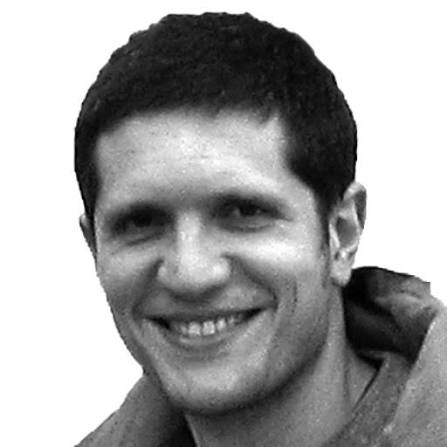
Carlos Fernández-Tornero, Group leader, CIB-CSIC, Madrid, Spain.
Biography
Carlos Fernández-Tornero obtained a MSc in Biochemistry from Universidad de Granada in Spain. He then joined the lab of Guillermo Giménez-Gallego and Antonio Romero at CSIC for his PhD thesis research where he was awarded a PhD by the Universidad Autónoma de Madrid. He then did a post-doc with Christoph Mueller at the EMBL Grenoble in 2002, later becoming a staff scientist at EMBL Heidelberg when Christoph’s group moved there in 2007. In 2009Carlos joined CIB-CSIC in Madrid as a group leader.
Research
The Fernández-Tornero group aims to unveil the structure of cellular machines to gain mechanistic insight into macromolecular function and assist the development of biomedical applications. For this, they use electron cryomicroscopy (cryo-EM) and X-ray crystallography, both providing information to atomic resolution, combined with other biophysical and biochemical techniques. This integrative methodology is applied to study essential cell processes such as genome transcription, DNA repair, DNA integration and cell division.
Talk abstract
RNA polymerases are large macromolecular assemblies that transcribe the genome in all organisms. Because RNA polymerases work on the chromatin, their activity is connected to other cellular processes such as DNA repair and DNA integration. Eukaryotic RNA polymerases I and III (Pol I and Pol III) synthesize untranslated RNAs that mediate protein synthesis, regulate gene activity or catalyze chemical reactions. In the talk, Carlos Fernández-Tornero will present results on the roles of yeast Pol I and Pol III in transcription, DNA lesion detection and retrotransposon integration. Pol I transcription is regulated through enzyme hibernation (Torreira et al., eLife 2017), a mechanism that was later shown to operate in other RNA polymerases. Besides, detection of DNA lesions by Pol I depends on its intrinsic RNA cleavage activity and differs from other RNA polymerases (Sanz-Murillo et al., PNAS 2018; Santos-Aledo et al., Nat Commun 2025). Finally, Pol III mediates integration of yeast retrotransposon Ty1 upstream of transfer RNA genes, a mechanism that ensures insertion at safe genome locations (Nguyen et al., Nat Commun 2023; Huecas et al., unpublished). Altogether, these results underscore the prominent role of RNA polymerases in chromatin-associated cellular processes.